

By Jason Duran
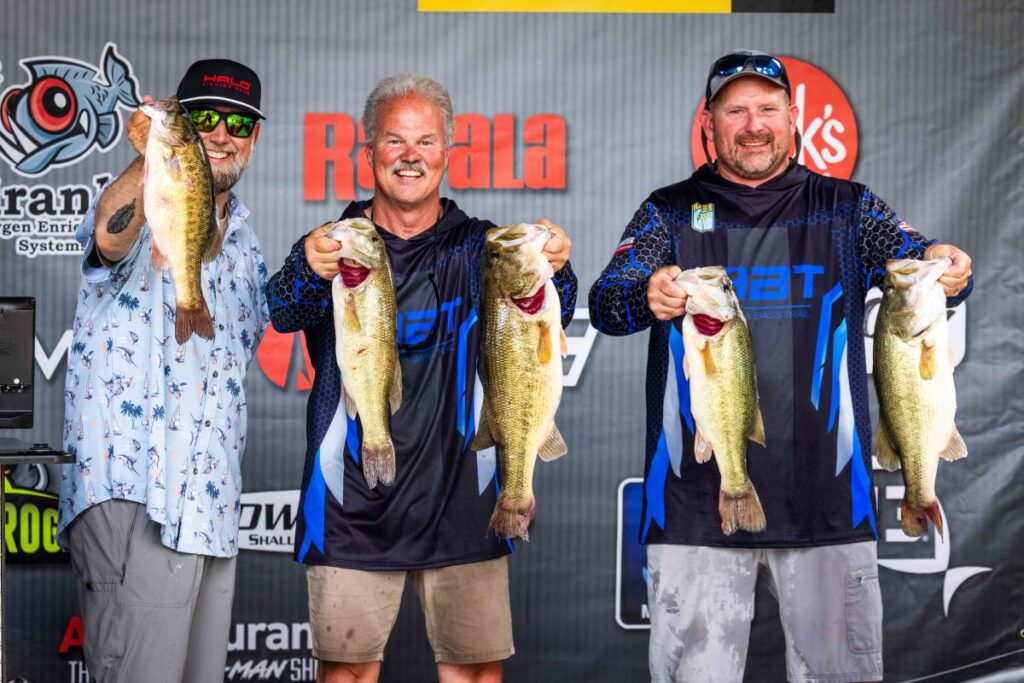
NEELY HENRY LAKE — There are good tournament days, there are career days, and then there are days that become part of a lake’s history.
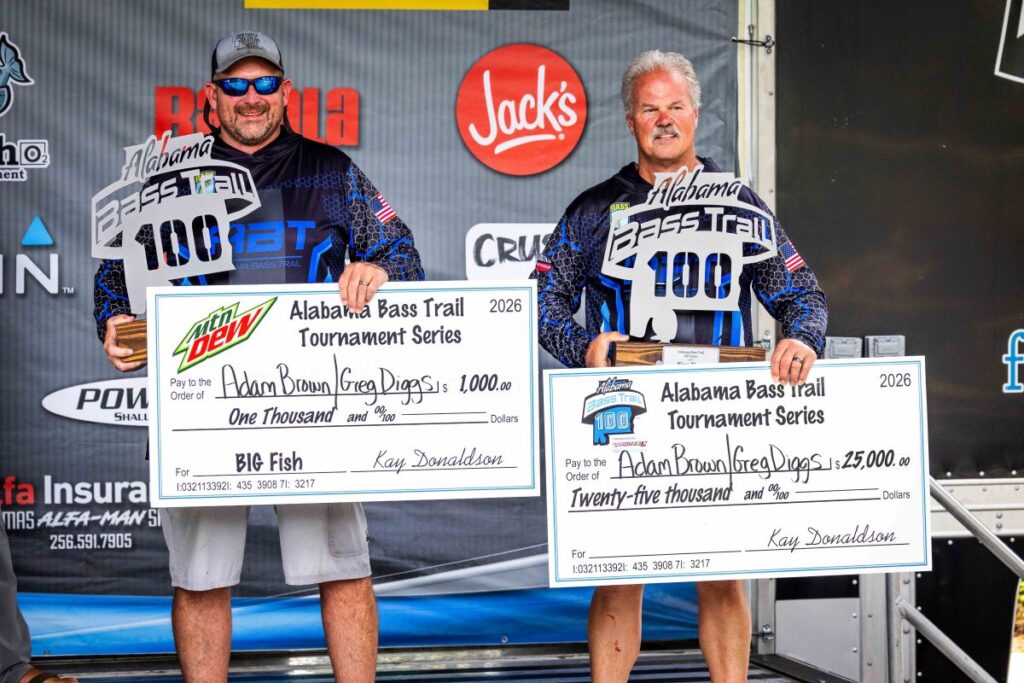
For Adam Brown and Greg Diggs, Stop No. 2 of the 2026 Alabama Bass Trail 100 Series on Neely Henry Lake became one of those days.
The Rainbow City and Gadsden team brought 30.29 pounds to the scales, a five-bass limit that not only won the tournament but did so in historic fashion. Their bag was anchored by an 8.80-pound largemouth that earned Big Fish honors, pushing their total earnings to $26,000 with the $25,000 first-place prize and the $1,000 Big Fish bonus.
On almost any other day at Neely Henry, the 23.16 pounds weighed by second-place finishers Tim Hurst and Mark McCaig would have been the story. Zeke Gossett and Joey Nania added another 21.58 pounds in third, giving the event three bags over 20 pounds and continuing what has become one of the most impressive springs in recent memory on the Coosa River fishery.
But even in a field full of quality limits, Brown and Diggs separated themselves by more than seven pounds.
That margin was not built on one lucky bite. It came from timing, adjustment, local knowledge, and a nearly perfect execution of a plan that had to change once tournament morning arrived.
Brown and Diggs began the day expecting to lean on several topwater areas near the upper end of the lake. During practice, the water movement had those areas set up well. By tournament morning, however, the current had changed dramatically. The pair said the flow had dropped from what they had seen earlier in the week, forcing them to settle in, adjust and let the day develop.
They also had to manage boat traffic in the areas they wanted to fish. Rather than force the issue, they backed off, allowed other competitors to move through, and returned when the water and fish had time to settle.
From there, the day turned into the kind of clean, efficient performance tournament anglers rarely experience.
“We’ve never fished this clean before,” Brown said. “Usually every tournament there’s one that gets off or one you talk about at the end of the day. Today, every fish we hooked, we caught.”
Their approach was not complicated. Brown and Diggs relied on the kind of shallow-water power fishing that has long been part of Neely Henry’s identity. Spinnerbaits, ChatterBaits and squarebill crankbaits produced the bites that mattered.
The biggest of those bites came after the team already had nearly 24 pounds in the livewell. At that point, Brown and Diggs briefly discussed heading back toward weigh-in early. Instead, with time still left in the day, they kept fishing.
Diggs connected with an 8.80-pound largemouth on a squarebill crankbait, a fish that turned an already excellent limit into a historic one. The bait was an H2O Express squarebill he had picked up at Academy Sports the night before, a detail that added a memorable footnote to an otherwise dominant performance.
Until that moment, Brown and Diggs were content to keep fishing. They already had nearly 24 pounds and had briefly discussed whether there was any reason to leave early. The 8.80-pound giant answered that question.
Suddenly, a great day became a once-in-a-career day.
Their 30.29 pounds became the defining moment of the tournament and one of the largest bags ever weighed in Alabama Bass Trail competition on Neely Henry. For a team long respected on the lake, it was a performance that matched their reputation and then went beyond it.
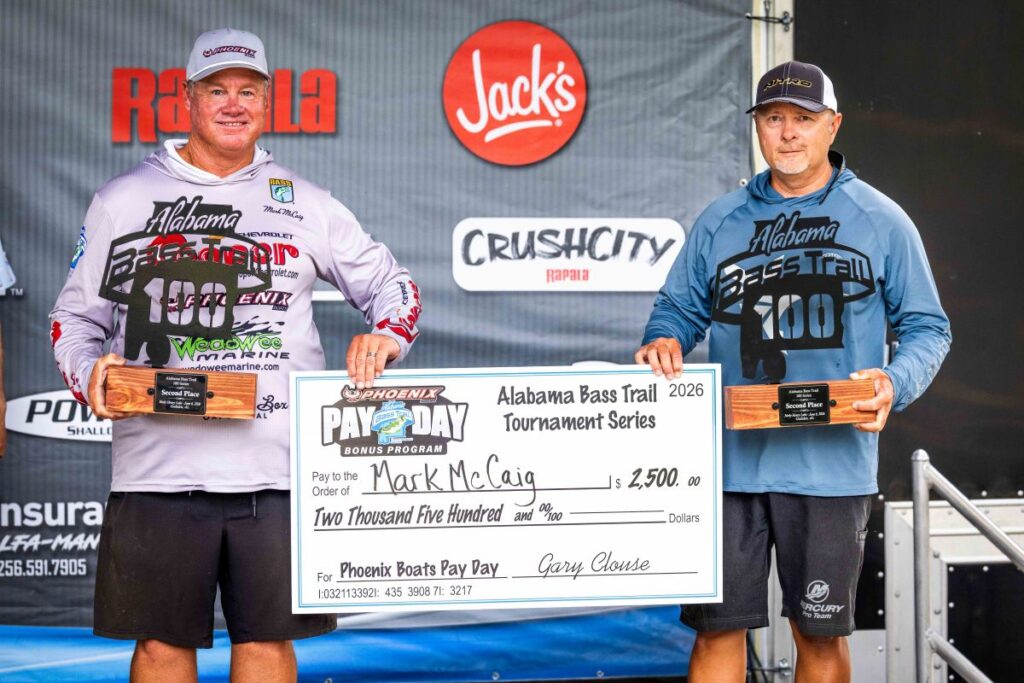
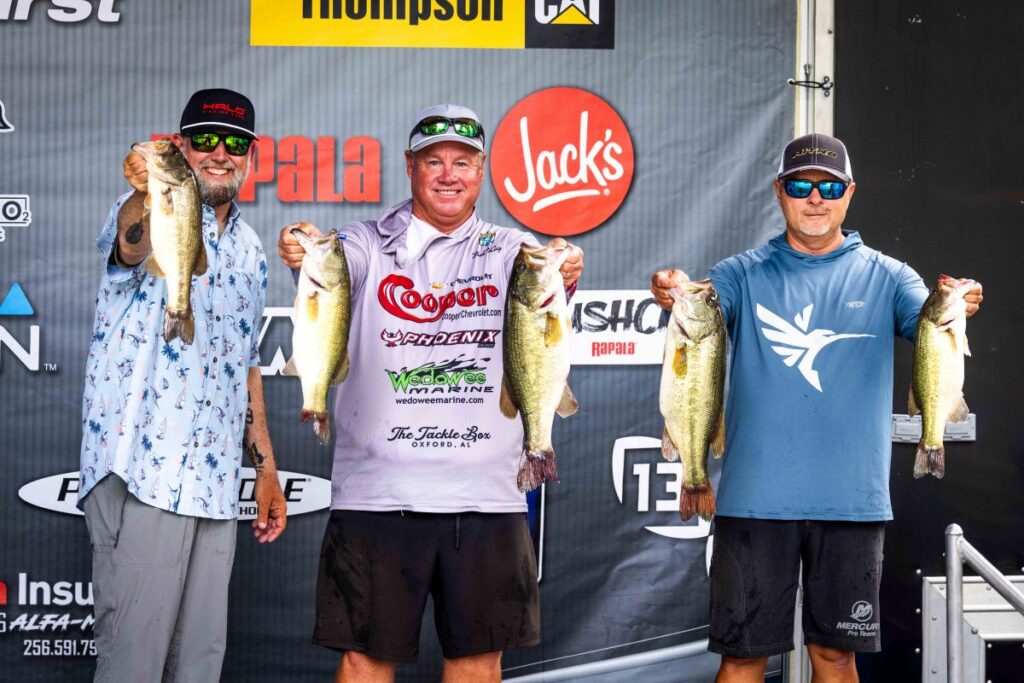
Hurst and McCaig finished second with 23.16 pounds, a weight that would have won many major events on Neely Henry. Their tournament began with an adjustment after another boat was on their intended starting place. Instead of leaving the area, they slid over to nearby water they knew well but had not considered their best option.
The move produced quickly. They caught a 2.5-pounder and a 6-pounder on a frog early, then added more quality from shallow grass. Their practice had been split, with Hurst spending most of his time in the grass near takeoff while McCaig explored the lower end of the lake looking for bigger bites.
That split approach gave them options. After building a strong limit from the grass, they made a move down the lake around midday and later added a key fish that McCaig saw around brush. After several attempts, he convinced the fish to bite and the team made one final upgrade before heading back.
Their final limit included two fish in the 6-pound class, a 4-pounder and two more quality bass. The runner-up finish earned $12,500, and McCaig added the $2,500 Phoenix Boats Pay Day bonus as the highest-finishing qualified Phoenix owner, giving the team $15,000 in total earnings.
McCaig also pointed to the health of the grass as one of the biggest stories on Neely Henry. He said the grass is the best he has seen in nearly 20 years, and that improved habitat was evident in both the number of quality fish caught and the variety of patterns that produced.
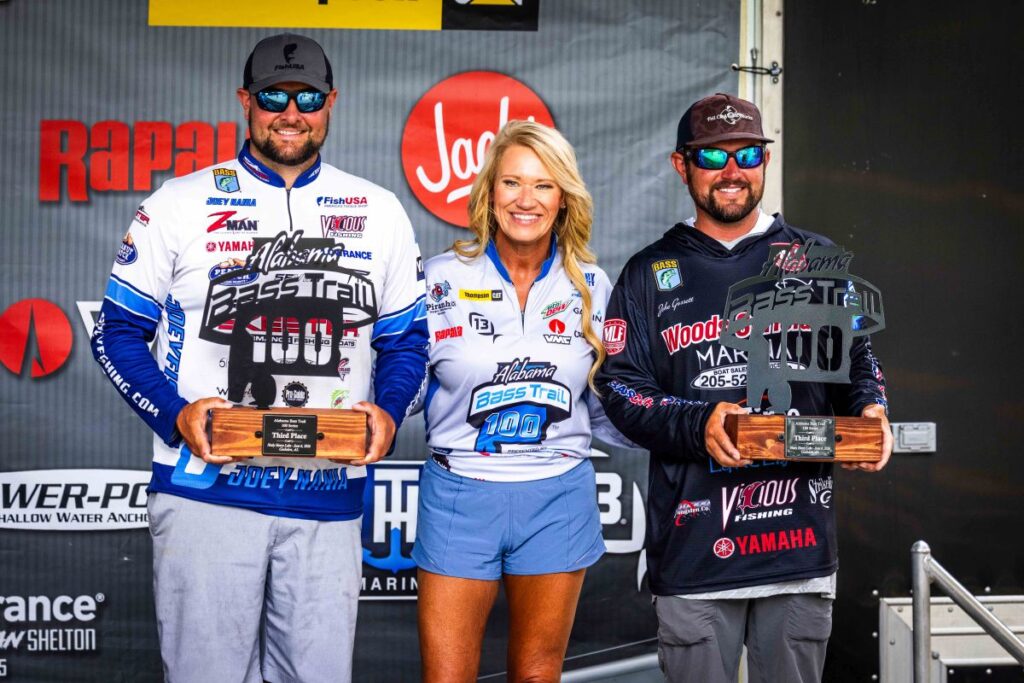
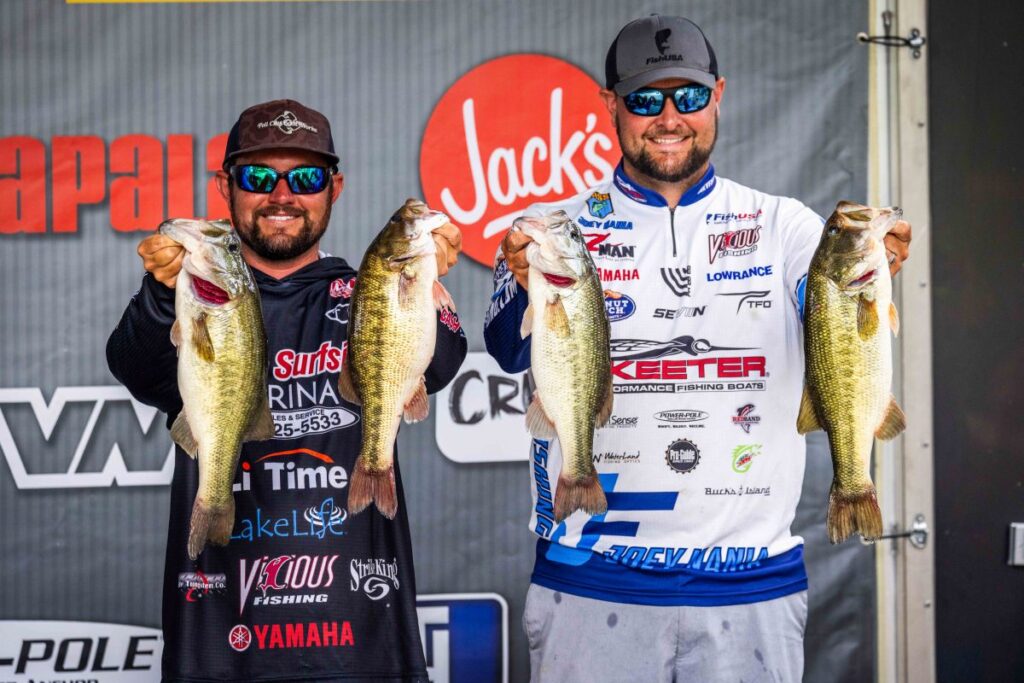
Gossett and Nania took third with 21.58 pounds and earned $10,000. Their day started fast after a short stop near takeoff failed to produce. They moved to a mid-lake grass stretch, and on the third cast Gossett caught a fish close to five pounds on a swim jig.
From there, the stretch came alive.
The team built nearly 18 pounds in the first hour with a white Strike King Hack Attack Heavy Cover Swim Jig, a white Rage Craw trailer and a white Strike King Sexy Frog. They later moved offshore and used forward-facing sonar to target fish around brush and stumps, adding more quality with a Koika-style soft plastic.
Their finish continued a strong run for Gossett and Nania and added another layer to a tournament that showed just how many ways Neely Henry could be fished successfully. Shallow grass, frogs, swim jigs, spinnerbaits, ChatterBaits, squarebills and offshore cover all played a role near the top of the standings.
That may be the biggest takeaway from the event. Brown and Diggs delivered the historic headline, but the full field showed the depth of the fishery. Three teams broke 20 pounds. Fourth place required 19.72. Fifth took 17.61. Even with changing current and water conditions, Neely Henry produced the kind of weights that make anglers rethink what is possible on the lake.
Top 10 Results
With only one event remaining in the three-tournament ABT 100 season, Matt Adams and Jason Whitehead lead the Angler of the Year standings with 188 points. Brian Stiffler and Wesley Gore sit second with 184 points, followed by Jed Lamb and Andrew Loberg in third with 181. Tim Hurst and Mark McCaig’s runner-up finish moved them into 14th in the standings, while third-place finishers Zeke Gossett and Joey Nania climbed to 15th. The season will conclude at Lake Jordan on November 7, where the 2026 ABT 100 Angler of the Year title will be decided.
The Alabama Bass Trail 100 Series pays back $100,000 at each regular-season event, including $25,000 for first place and a $1,000 Big Fish award.
Download and listen to the ABT Podcast presented by Phoenix Boats and Alabama Bass Trail. New episodes featuring tournament winners, industry news and upcoming event previews are released each Tuesday on all major podcast platforms.
The Alabama Bass Trail thanks its sponsors: Phoenix Boats, AMFirst, Larry Puckett Chevrolet, 13 Fishing, Rapala, VMC, CRUSHCITY, Buffalo Rock, Academy Sports and Outdoors, Jack’s, Garmin, Thompson Tractor Company, PiranhO2, Alabama State Parks, Halo Fishing, Snag Proof, NetBait, Bait Fuel, Alfa Insurance Thomas ALFA MAN Shelton, TH Marine Supplies, Power Pole, Pro Guide Batteries, Yamaha, SCUM FROG, E3 Sports Apparel, FishAlabama.org, Sweet Home Alabama and Alabama Mountain Lakes Tourist Association.


The Alabama Bass Trail 100 is run by the Alabama Bass Trail and is a program of the Alabama Mountain Lakes Tourist Association.

©2026 Alabama Bass Trail | All Rights Reserved | Site by McComm